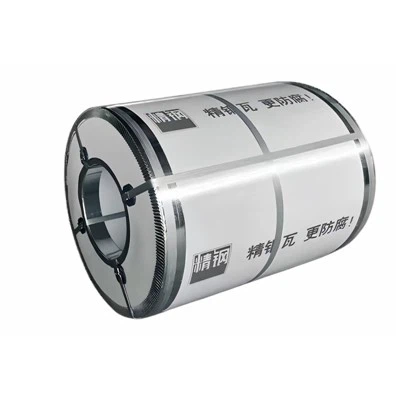
As a composite material combining a low-carbon steel substrate with a dual-protection coating, Q195 Galvanized Metal Sheet (PPGI/PPGL) has become an essential material in the construction, home appliance, and warehousing industries due to its cost-effectiveness and adaptability to multiple scenarios. Below is a professional reference for industry practitioners and purchasers, covering basic product knowledge, industry applications, and development trends.
I. Product Types and Core Differences
Q195 Galvanized Metal Sheet is primarily divided into two categories: Pre-painted Galvanized Steel (PPGI) and Pre-painted Galvalume Steel (PPGL). The former uses a pure zinc layer for base protection, making it suitable for temperate and dry environments. The latter employs a zinc-aluminum-magnesium alloy coating, which improves corrosion resistance by over 30% and is designed for harsh scenarios such as coastal areas and high-humidity environments.

Compared to similar Q235 galvanized sheets, Q195 material offers superior ductility, with a minimum bending radius as low as five times the sheet thickness, making it more suitable for complex shape forming. Furthermore, its cost is typically 10%-15% lower, establishing it as a cost-effective choice for small and medium-sized projects.
II. Core Industry Applications and Usage Specifications
In the construction industry, Q195 Galvanized Metal Sheet is widely used for roof cladding, partition panels, and steel structure exterior walls. Installation must follow these steps: base preparation → surveying and layout → sheet cutting → fixing and splicing → sealant treatment. During construction, care must be taken to avoid scratching the coating with sharp tools to ensure its anti-corrosion performance.
In the home appliance industry, it is commonly used for refrigerator side panels and air conditioner outdoor unit casings. Relying on the dual protection of the zinc layer plus the PE/PVDF coating, the service life of these components can exceed 25 years.
III. Industry News and Raw Material Dynamics
Recently, the raw material market has shown a trend of stabilizing with a slight upward bias. The price of Q195 low-carbon steel billets has increased by 3.2% month-on-month due to constraints in iron ore supply. However, zinc prices have seen a slight decline following the release of new global production capacity. These factors have generally contained the cost fluctuation of Q195 Galvanized Metal Sheet within 2%.
Industry news indicates that the EU's newly introduced "Green Building Directive" mandates that building materials for new constructions after 2025 must meet a 30% carbon emission reduction standard. This regulation is pushing manufacturers of Q195 Galvanized Metal Sheet to upgrade their environmentally friendly coating technologies.
IV. Future Industry Development Trends
Environmental Protection: Water-based coatings and chrome-free passivation technologies will become mainstream to reduce VOC emissions.
Functionalization: Q195 Galvanized Metal Sheets with specialized coatings, such as antibacterial and self-cleaning varieties, will expand into niche sectors like medical facilities and food warehousing.
Customization: The development of customized products-with specific thicknesses (0.3-3.0mm) and textures (wood grain, stone grain)-will continue to grow, catering to diverse industry needs.
Lightweighting: Through optimization of the substrate formula and coating processes, sheet weight will be reduced without compromising strength. This adapts the material to emerging applications such as new energy appliances and modular construction.