I. Storage, Transportation, and Installation Guidelines
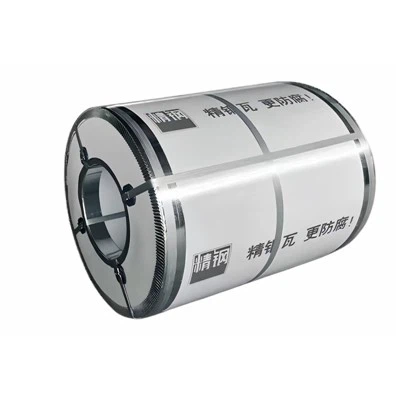
Galvanized steel sheets should be stored in a dry, well-ventilated environment away from corrosive substances. They must be stacked on racks elevated at least 10 cm above the ground. During transportation, ensure sheets are wrapped in waterproof film and securely fastened to prevent coating scratches and deformation. For installation, use corrosion-resistant screws specifically designed for this purpose. During cold forming, the bending radius must not be less than 10 times the sheet thickness to avoid coating cracking. For maintenance, regularly clean surface dust and debris. Any localized corrosion should be promptly treated with touch-up paint from a specialized anti-corrosion coating system.

II. Core Applications in Industrial Construction
Galvanized steel sheets are the preferred building material for industrial plant roofs and walls, particularly in corrosive and high-humidity environments. In facilities such as chemical plants, steel mills, and pickling lines, the zinc layer combined with the surface coating provides dual protection, resisting erosion from acid-alkali gases and chemical media. This addresses the critical failure of traditional painted sheets (color steel), which often rust and leak within 1-2 years. In coastal warehouses and aquaculture farms, they effectively resist corrosion from salt spray and humid air, significantly extending building service life. Furthermore, these products offer superior thermal insulation, reducing indoor workshop temperatures by approximately 8°C in summer. Their compatibility with photovoltaic bracket installations meets dual energy-saving and environmental protection requirements, making them the building material of choice for over 300 enterprises.
III. Industry Developments
The galvanized steel sheet industry has recently seen key developments:
· The implementation of the national standard "GB55030-2022 General Code for Energy Conservation in Construction and Municipal Engineering" has driven industry upgrades toward higher corrosion resistance and lower energy consumption.
· Innovations in film coating technology, such as multi-layer composite processes, have improved product salt spray resistance to over 1,000 hours.
· Market demand shows differentiated growth, with procurement of high-specification PVDF-coated galvanized sheets in the chemical and photovoltaic sectors increasing by 25% year-on-year.
· Industry standardization is accelerating, with further refinement of testing standards for zinc layer adhesion and coating weatherability, promoting high-quality development.
IV. Future Development Trends
The industry is evolving around three core directions: environmental sustainability, high performance, and multifunctionality.
1. Green Manufacturing: Low-energy galvanizing processes and environmentally friendly coating materials will become mainstream to reduce carbon emissions.
2. Multifunctional Products: Demand will grow for composite products integrating corrosion resistance, thermal insulation, photovoltaic compatibility, and sound insulation.
3. Customized & Smart Solutions: Services will deepen to provide personalized specifications and installation plans for diverse corrosive environments and architectural designs. Intelligent production with automated inspection and traceability systems will enhance quality stability.
4. Market Expansion: Driven by new energy and high-end manufacturing, the market share for high-specification, long-life galvanized steel sheets will continue to rise.
V. Product Types and Classifications
Galvanized steel sheets (PPGI/PPGL) are primarily classified by coating type and production process:
· By Coating Material:
· Polyester (PE): Offers excellent cost-performance for conventional industrial applications.
· Polyvinylidene Fluoride (PVDF): Provides superior weatherability, ideal for highly corrosive environments.
· ASA/PMMA Co-extruded Coatings: Offer enhanced durability and color retention.
· By Production Process:
· Hot-Dip Galvanized (PPGL): Features a thick zinc layer for strong corrosion resistance.
· Electro-Galvanized: Provides a smoother, more uniform coating for applications requiring high surface precision.
· By Thickness:
· Thin Gauge (0.3–0.6 mm): Typically used for roofing and wall cladding.
· Thick Gauge (0.7–1.2 mm): Used for structural and load-bearing components.
VI. Comparison with Similar Products
· vs. Traditional Painted Steel Sheets (Color Steel):
· Galvanized sheets offer dual corrosion protection (zinc + coating), with a service life three times longer and typically a 10-year warranty.
· Traditional color steel often has no warranty and is prone to rust and leakage.
· Galvanized sheets have far superior thermal insulation (thermal conductivity as low as ~2.93 W/m·K) compared to color steel (~40 W/m·K).
· vs. Untreated (Ordinary) Steel Sheets:
· Galvanized sheets solve the corrosion problem at the source via the zinc layer, eliminating the need for additional post-fabrication anti-corrosion measures and enabling faster construction.
· The pre-applied coating allows for color customization, combining aesthetics with protection.
· Ordinary steel requires post-application painting, resulting in higher long-term maintenance costs.
VII. Raw Material Market Dynamics
The market for core raw materials shows a steady upward trend:
· Steel Substrate: Prices for high-quality low-carbon steel substrate have remained stable (within a 3% fluctuation range) due to supply-side reforms, ensuring production stability.
· Zinc: Zinc ingot prices have risen slightly due to global mineral supply adjustments. Manufacturers are mitigating cost impacts through bulk purchasing and process optimization.
· Coatings: Technological breakthroughs in eco-friendly materials, such as new chrome-free passivators and water-based coatings, are now in mass production. These not only enhance environmental performance but also improve coating adhesion by approximately 15%.
· Traceability: A full-process traceability mechanism for substrates and coating raw materials is being widely adopted to ensure source-level quality control.
VIII. Standard Installation Procedure
1. Planning & Verification: Confirm product specifications and review all quality assurance documentation against the architectural design.
2. Site Preparation: Clean the installation area to ensure a flat, dry surface. Erect safe working platforms and verify the spacing and levelness of structural purlins.
3. Material Pre-Processing: Unpack and inspect sheets for any coating damage or zinc layer detachment. Stack materials in the planned installation sequence.
4. Precision Installation: Fix sheets using specialized anti-corrosion screws at a controlled spacing of 300–500 mm. Ensure all lap joints are tight to prevent water ingress.
5. Joint Sealing: Apply dedicated sealants and flashing at all critical junctions (roof ridges, eaves, corners) to enhance waterproofing.
6. Quality Inspection: Post-installation, check fastening security, surface flatness, and seal integrity. Conduct a water test to confirm no leakage.
7. Handover & Maintenance: Provide installation reports and warranty agreements. Educate the client on routine maintenance and establish clear after-sales service channels.