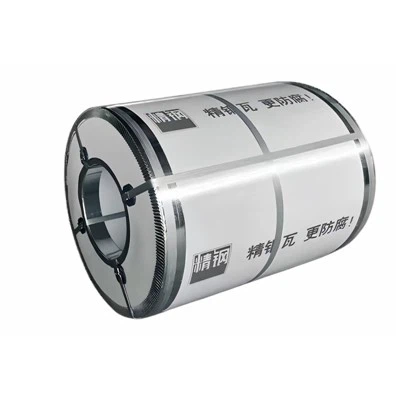
Galvanized steel sheet refers to cold-rolled steel sheet with a layer of zinc plated on its surface, achieved through electroplating or hot-dip galvanizing. The purpose of galvanizing is to protect the steel surface from corrosion and oxidation, improving its durability and service life.
Stainless steel is an alloy steel containing at least 10.5% chromium. It possesses corrosion resistance and oxidation resistance, is not easily rusted or corroded, and is suitable for some special environments and requirements.
The main differences between galvanized steel sheet and stainless steel are as follows:
1. Material: Galvanized sheet is cold-rolled steel sheet with a zinc layer plated on its surface, while stainless steel is an alloy steel containing alloying elements such as chromium.
2. Corrosion resistance: Stainless steel has strong corrosion resistance, while galvanized sheet has lower corrosion resistance.
3. Appearance: Stainless steel has a smoother surface and a metallic luster, while galvanized sheet has a matte, silvery-gray surface.
4. Price: Generally speaking, stainless steel is more expensive than galvanized sheet.
Galvanized steel sheet has the following advantages:
1. Strong corrosion resistance: Galvanized sheet has excellent corrosion resistance and can resist most chemical corrosion.
2. Good processability: Galvanized sheet is easy to process, cut, form, and weld.
3. Long service life: Galvanized sheet has a long service life, extending the lifespan of the steel sheet.
4. Relatively low price: Compared with high-end materials such as stainless steel, galvanized sheet is more economical.
5. Good wear resistance: Due to the good hardness and wear resistance of the zinc layer on the surface of galvanized sheet, it can resist mechanical wear to a certain extent.
In summary, galvanized steel sheet has good corrosion resistance, processability, service life, and decorative properties, making it a commonly used material widely used in construction, automotive, and home appliance industries.