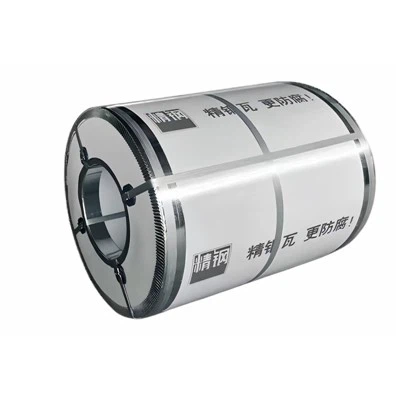
In the field of metallic materials, galvanized steel sheet and cold-rolled steel sheet are two widely used products with vastly different characteristics. Cold-rolled steel sheet is the basic form of steel rolling processing, while galvanized steel sheet is an upgraded product of cold-rolled steel sheet after surface treatment. The differences in their production processes, performance characteristics, and application scenarios directly determine their different positions in the industrial chain. A deep understanding of these differences can not only provide a scientific basis for material selection but also help find the optimal balance between cost control and performance assurance.
The Essential Differences in Production Processes
(1) Cold-Rolled Steel Sheet: The Basic Process of Rolling and Shaping
The production of cold-rolled steel sheet uses hot-rolled steel sheet as raw material, achieving thickness reduction and performance improvement through multi-pass rolling at room temperature (rolling temperature < recrystallization temperature, typically room temperature to 100℃). Its core processes include:
Rolling process: Hot-rolled slabs (3-8mm thick) are rolled to 0.15-3.0mm using a cold rolling mill. The number of rolling passes is adjusted according to the target thickness (5-8 passes are required for thinner specifications), with a reduction rate of 15%-30% per pass. This refines the grain size and improves strength through plastic deformation of the metal.
Annealing treatment: Due to work hardening after cold rolling, the plasticity of the steel sheet decreases. Continuous annealing (at 700-800℃) is required to restore plasticity, achieving different hardness states (e.g., soft, semi-hard, hard) depending on the needs.
Finishing process: This includes leveling (improving sheet shape and controlling roughness Ra0.5-2.0μm) and edge trimming (ensuring dimensional accuracy), ultimately forming a smooth, dimensionally accurate cold-rolled steel sheet.
The key to cold rolling is achieving densification and performance control of steel through mechanical force, without altering the material composition through chemical or heat treatment. It serves as the "basic raw material" for further steel processing.
(2) Galvanized Steel Sheet: Surface Treatment for Enhanced Corrosion Resistance
Galvanized steel sheet uses cold-rolled steel sheet as the substrate (accounting for over 90%). The galvanizing process imparts corrosion resistance. The core processes are divided into two categories: hot-dip galvanizing and electro-galvanizing:
Hot-dip galvanizing: After degreasing and pickling, the substrate is immersed in molten zinc at 450-460℃, forming a composite coating of a zinc-iron alloy layer (thickness 5-15μm) + a pure zinc layer (total zinc layer 50-275g/m²). The zinc layer and substrate are metallurgically bonded, with an adhesion strength exceeding 80N/cm.
Electro-galvanizing: The substrate is electrolyzed in an electrolyte containing zinc ions, causing zinc ions to deposit on the surface to form a pure zinc layer (5-50g/m²). The zinc layer and substrate are physically bonded, with an adhesion strength of 30-50N/cm, and a smoother surface (Ra0.1-0.5μm).
The core of galvanizing is transforming "basic steel" into "corrosion-resistant steel" by forming a zinc layer on the surface of cold-rolled steel sheets. The production process involves 3-5 more surface treatment steps than cold-rolled steel sheets.
Key Performance Differences
(1) Corrosion Resistance: The Absolute Advantage of Galvanized Steel Sheets
Cold-rolled steel sheets have extremely poor corrosion resistance. Rust will appear after 2-3 days of exposure to air, and noticeable red rust will form within one month in a humid environment. The corrosion mechanism involves iron reacting with oxygen and moisture in the air to form loose Fe₂O₃・nH₂O, which cannot prevent the continuous corrosion process.
Galvanized steel sheets achieve corrosion protection through a zinc coating:
Sacrificial anode protection: Zinc's electrode potential (-0.76V) is lower than iron's (-0.44V). When the coating is damaged, zinc corrodes preferentially, protecting the steel substrate.
Physical barrier effect: The zinc layer forms a dense oxide film (ZnO, Zn(OH)₂), preventing corrosive media from contacting the substrate. Hot-dip galvanized steel sheets (zinc coating 275g/m²) can resist rust for 8-12 years in industrial environments, 50-100 times longer than cold-rolled steel sheets; even electro-galvanized steel sheets (zinc coating 20g/m²) have 5-10 times higher corrosion resistance than cold-rolled steel sheets.
(2) Mechanical Properties: Subtle Differences Dominated by the Substrate
Cold-rolled steel sheets have a wide range of mechanical properties. By adjusting the rolling process and annealing degree, the following can be achieved:
Soft State (SPCC - S): Tensile strength 270 - 330 MPa, elongation 30% - 40%, suitable for complex stamping;
Hard State (SPCC - H): Tensile strength 380 - 500 MPa, elongation 5% - 10%, suitable for structural components requiring high strength.
The mechanical properties of galvanized steel sheets are determined by the substrate. The galvanizing treatment has a minimal impact (strength change ±5%), but the following should be noted:
The high temperature of hot-dip galvanizing (above 450℃) may reduce the strength of cold-rolled hard state steel sheets by 10% - 15% (annealing softening);
Electro-galvanizing is a room temperature process that has no effect on the substrate properties and can completely preserve the strength and plasticity of cold-rolled steel sheets.